
KABRIC Pale Beach

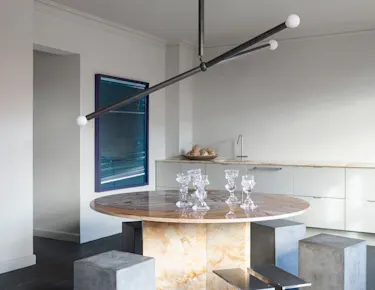
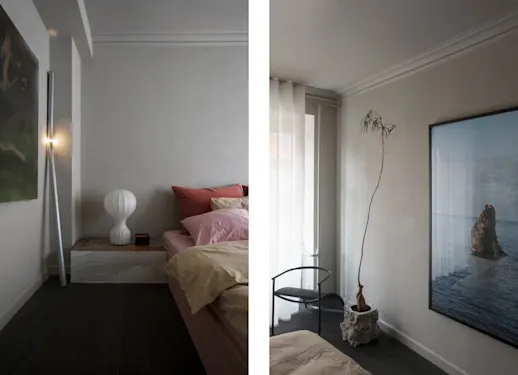
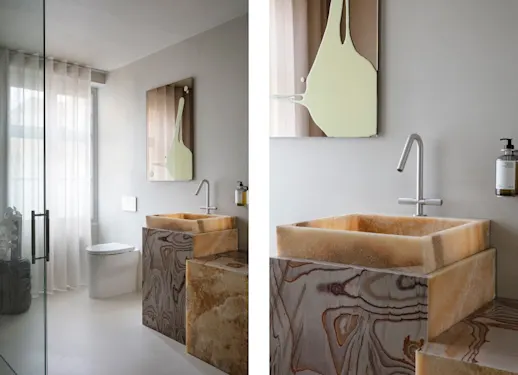
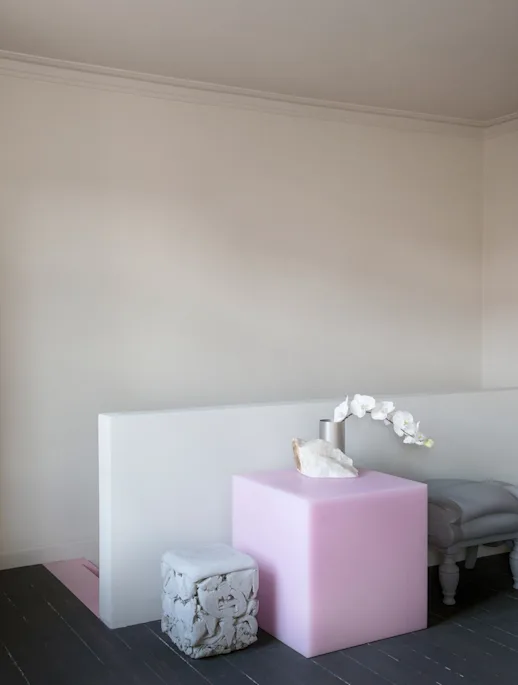
Creative director Sune Palner shares a 1916 apartment in Copenhagen with his husband, Marco. Original architectural details meet steel, stone, glass and Douglas Dinesen wood flooring. On every wall and ceiling, KABRIC in Pale Beach creates a continuous material presence. Its matte texture gives the rooms a common rhythm while allowing light and the surrounding materials to come into focus. This is a home experienced through the body as much as through the eye.
“I wanted walls that brought calm to the room, but still had something to reveal when you came closer.”
Sune works in creative direction and has used DETALE across several projects. At home, he wanted walls with a physical presence that could bring together objects and materials from different periods. KABRIC’s mineral quality gives the expansive surfaces depth without turning them into a decorative gesture. Against the warmth of wood and the precision of steel, the finish assumes its own place in the material palette. It continues across the ceilings, connecting the rooms, while the floor retains its distinct grain, direction and weight.
Pale Beach was chosen in relation to the furniture, art and changing daylight. On grey days, it appears more muted and mineral; sunlight draws out its warmer undertones. From a distance, the textured surface brings calm. Up close, subtle traces of the hand emerge. Skilled craftspeople applied the KABRIC, and for Sune, the making is inseparable from the finished material. Its recurring texture softens the edges of the rooms to the eye and gives the architecture coherence, while leaving the apartment’s original details their own voice.
“When KABRIC continues from room to room, the surface becomes part of the architecture rather than a backdrop.”